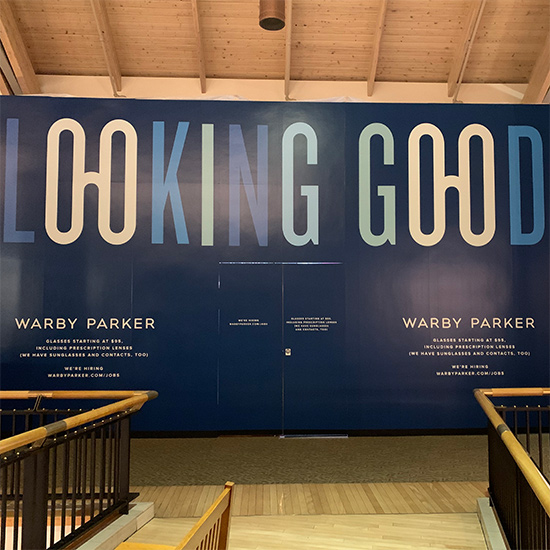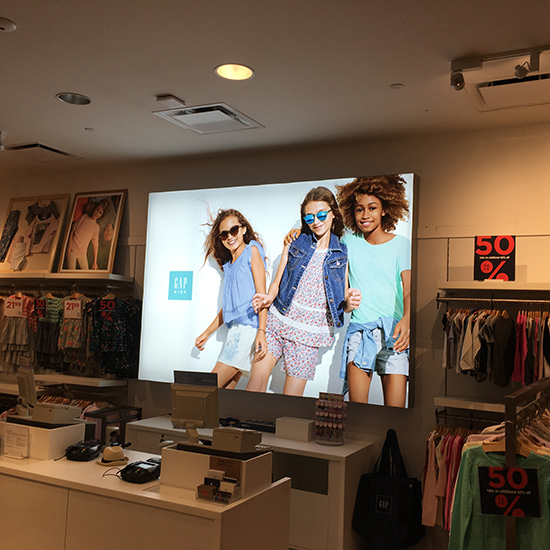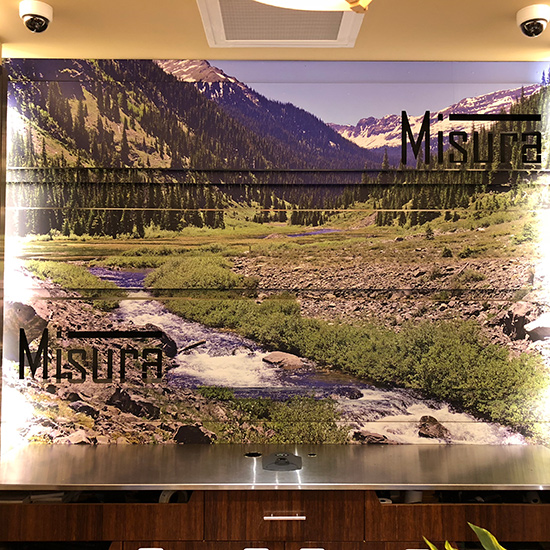


Walk into any major retail chain and something happens before you read a sign, talk to an employee, or even fully process what you’re looking at—you feel the brand. The colors, the scale, the imagery, the atmosphere… it all clicks instantly. That reaction isn’t accidental. Big brands don’t decorate their spaces; they design them to engineer memory. Every surface has a job, and walls in particular are treated as some of the most valuable real estate in the building.
That’s because major retailers understand something many local businesses overlook: interiors are a marketing channel. Walls aren’t just there to hold paint—they reinforce identity, guide attention, and shape perception over and over again with every visit. Unlike posters or temporary signage, wall wraps create large-scale, immersive brand exposure that customers subconsciously absorb. And once they’re installed, they keep working without monthly ad spend, impression limits, or algorithm changes. That is, they become a silent but consistent brand ambassador.
In this article, we’ll break down exactly how major retail chains use wall graphics to drive brand consistency, storytelling, atmosphere, and customer experience. More importantly, we’ll show how local businesses—from offices and retail stores to gyms, clinics, and service companies—can apply the same playbook using strategic wall wraps. Because this isn’t about decoration. It’s about using your space to reinforce your brand every single day.
How Big Brands Intentionally Design Interiors To Reinforce Brand Identity
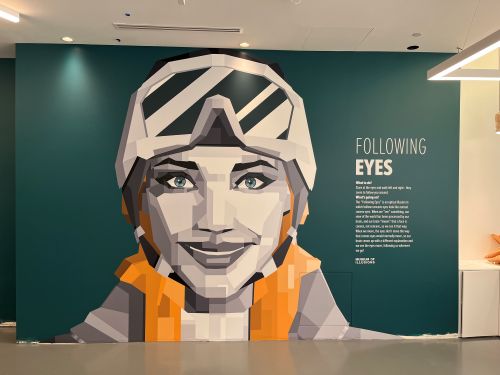
Brand identity is not just a logo on the door. It is the consistent experience customers recognize the second they step inside, even if they are in a different city, a different layout, or a different shopping mood.
That consistency is built on purpose. Big brands treat the physical space like a controlled environment where every detail reinforces familiarity, trust, and “yep, I’m in the right place.”
Why Walls Get Special Attention In Retail Design
Walls do the heavy lifting because they are always present. Customers might ignore a sign, but they cannot avoid the environment, especially when it fills their peripheral vision.
Walls also guide movement and attention. When we install wall wraps for businesses, we think beyond what looks good and focus on what supports flow, clarity, and brand recall.
- They are the largest uninterrupted surface area in most interiors.
- They stay in the customer’s field of view longer than posters or tabletop displays.
- They support wayfinding and product focus without adding clutter.
What Major Chains Build Into The Wall Experience
Most retail interiors rely on a few repeatable systems. The goal is not to “wow” once, but to reinforce the same brand signals over and over.
- Consistent color systems, patterns, and typography that feel identical from location to location.
- Lifestyle photography and aspirational scenes that make customers imagine themselves using the product.
- Branded textures and graphics that become recognizable even without reading a word.
The Real Goal: Predictable Impact
Pretty is optional. Predictable is the point: trust, recognition, and comfort that shows up every day, for every customer, without needing an extra sales pitch.
Brand Consistency: Walls Create Repetition That Sticks
Repetition is not glamorous, but it works. When customers encounter the same visual cues again and again, recognition becomes automatic, and trust tends to follow, go figure.
Major retail chains rely on consistent wall graphics to create a familiar experience across locations. Even when employees change, layouts shift, or products rotate, the brand still feels stable and recognizable.
What Consistent Wall Graphics Do for Major Chains
Consistency signals reliability. The space quietly confirms what customers already believe or want to believe about the brand before anyone says a word.
- Customers know what to expect no matter which location they visit.
- The brand remains intact even as promotions and merchandising change.
- Familiar visuals shorten the time it takes for customers to feel comfortable.
Why Wall Wraps Deliver Repetition Better Than Small Signage
Smaller signs fight for attention. Large-format wall graphics do not, because they become part of the environment customers move through.
- Scale creates a stronger visual imprint than posters or tabletop displays.
- Frequency matters because customers pass the same walls multiple times per visit.
How Local Businesses Apply the Same Principle
In offices, we use consistent visuals to reinforce professionalism and credibility the moment someone walks in. In retail environments, wall graphics help create a cohesive look that mirrors what customers already see on your website and social channels, making the brand feel unified and intentional.
Storytelling: Walls Create Immersion So Customers Feel the Brand
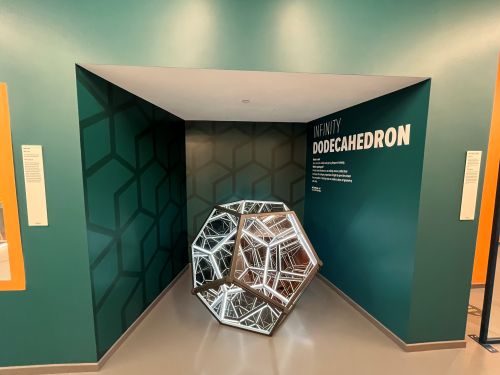
When people are immersed, they remember more. They also move through the buying process with less friction because the environment is doing some of the explaining for you.
Big retail brands use storytelling wall graphics to create context, not clutter. Instead of relying on staff to communicate the brand story repeatedly, the space does it consistently and customers absorb it while they browse.
What Storytelling Wall Graphics Look Like in Major Retail
These visuals usually answer silent customer questions: who are you, why should I trust you, and what makes this different. It is less about reading and more about feeling like the brand has depth.
- Brand origin or mission moments that give the company a backbone.
- Process visuals that show how it is made, sourced, or improved.
- Community and local tie-ins that make the brand feel connected and real.
Why Immersion Matters for Customer Behavior
Storytelling turns a basic transaction into a mini experience. It also gives customers the words and concepts to describe you later, which makes referrals and reviews easier.
- Customers remember the story, not just the product.
- Customers repeat the message in their own words to friends and coworkers.
How We Apply This for Local Businesses With wall wraps
In gyms, we can build transformation stories and values into the space so members feel the mission while they train. In clinics, we can use trust-building education and reassurance that helps patients feel informed before the appointment even starts.
Keep It Simple and Skimmable
The best storytelling does not need paragraphs. Clear headlines, bold visuals, and a few punchy lines usually outperform walls full of text.
Atmosphere: Walls Shape Perception and Perception Shapes Pricing Power
People judge quality fast. Before anyone speaks, the room has already suggested whether the business feels premium, basic, modern, dated, calm, or chaotic.
Major chains use wall graphics to control atmosphere with intention, so the space supports the price point instead of fighting it. This is where wall wraps can quietly do a lot of heavy lifting without adding anything “salesy.”
How Major Chains Control Atmosphere With Wall Graphics
The goal is to shape how the space feels at a glance, then reinforce it as customers move through the store.
- Energy level can be bold and high-contrast or calm and minimal depending on the brand.
- Clean design systems signal modernity and organization.
- Focused visuals communicate specialization more than generic posters ever could.
What Atmosphere Changes for the Customer Experience
A strong atmosphere reduces uncertainty. It helps customers think, this place looks legit, which supports higher perceived value and smoother conversion.
How We Translate This for Local Spaces
For salons and spas, we can create a calm, elevated boutique feel. For offices and retail, we can build a polished, intentional environment that feels worth walking into, then worth buying from.
Customer Experience: Wall Wraps Guide Behavior and Pay Off Long After Install
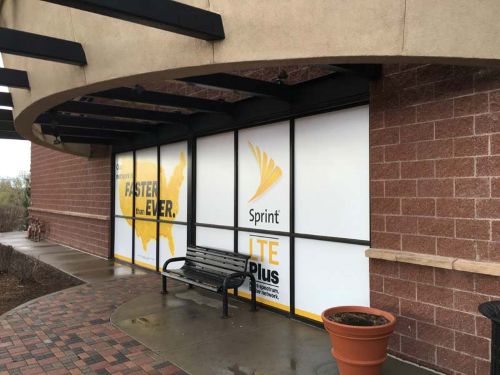
Walls do more than set the tone. They can direct customers, subtly and consistently, telling people where to go, what to notice, and what to do next without adding friction.
Major retail chains use wall graphics to improve flow and reduce confusion, especially in busy spaces. The best designs make the experience feel easy, and that ease tends to show up in conversion.
How Chains Use Wall Graphics To Improve Experience
- Wayfinding cues for departments, checkout, and service areas so customers do not have to hunt.
- Highlighting bestsellers or seasonal priorities to guide attention where it matters.
- Clear categories and simple calls-to-action that reduce decision fatigue.
- Photo moments that encourage sharing for extra visibility, then again.
Why the One-Time Investment Matters
Unlike ads, wall wraps do not stop working when the budget pauses. They earn daily impressions from every visitor, every day.
Where Wall Wraps Usually Deliver the Biggest ROI
Entry or waiting areas, behind the front desk, hallways and transitions, plus a feature wall or photo spot that customers actually want to stand in front of.
Walls Are Not Decoration, They Are Strategy
Big brands do not treat walls as background. They use them to reinforce consistency, tell stories, shape atmosphere, and guide the customer experience from the moment someone walks in. Every surface works together to support trust, recognition, and ease, all without relying on constant ad spend.
That is why wall wraps are best viewed as a marketing asset disguised as interior design. When installed correctly, they keep working day after day. At Denver Graphic Installers, we help businesses take the next step with walkthroughs, material recommendations, and install planning that fits the space and the brand. Professional installation matters, because clean alignment, tight seams, and durable finishes are what turn a good idea into a long-lasting result.